Tuesday, 20 August 2013

Lyndsay Williams' Technology and Patent Investigations, Frauds and other Scams


Introduction

I have been asked to document some of my successful patent,  financial and  fraud investigations over the years. My work is frequently used by the BBC,The Guardian, The Times, Daily Telegraph and The Daily Mail.  I live in Cambridge, UK, and can reveal results and some of the techniques, but a lot of the work involves tenacious internet research. Some of my technology and methods are not in the public domain. These involves image recognition technology,examining  maps,  geographical clues,  patent investigation,  and spotting  human errors as small as leaving spelling errors.   I will offer some tips below  in the interest of saving lives.  Some people enjoy solving crosswords for fun (I do, Daily Telegraph) ) but I also like bigger challenges that other people give up on. I can name large corporations, but not individuals, but many of them are still under investigation, left the UK,  in  prison, or dead. Please see the end of this post if you want help with your investigations.


I started in fraud investigation by accident in 1976 when I was at school. I was approached by Manchester police to design a phone tapping device. I had been building and designing electronic circuits since I was 14, radios, guitar effects pedal designs,  music synthesisers etc.  In those days, phones were analogue and so easy to tap into. The box was put outside the suspect's  house and conversations intercepted.


I am an electronic engineer/computer researcher and I have usually worked for ethical companies with good managers. The larger the company, the more ethical it is as has a reputation and brand to maintain. Smaller companies can shut down and start  trading again  the next day.  I worked for Microsoft Research  for 8 years with mostly good people, and passed the Microsoft ethics exam. E.g. if a person leaves the company, what do you do with the contents of their waste paper basket? Dispose of contents or keep?
I also gave a video deposition to a USA Judge recently re my personal involvement with Steve Ballmer,CEO Microsoft and the company's working practices.


keep the contents


Patents 1997-2013


I have spent many decades working with patent lawyers and noting  how patents are prepared by USA and UK  companies. These were normally patents for my computer designs for reputable companies like Microsoft and Apple.  I  work for  many Texas, USA and Korean  patent attorneys under NDA. I also provide  Consulting Expert  services.  I have given video depositions for US judges.
Some  of my designs now owned  by Apple covered here which is now part of the iPhone design and some handheld computers, camera  and sensing patents from Microsoft here. My Microsoft Sensecam patent is now in production as the Autographer Camera. I also do patent investigations for companies, the original name and company who filed the invention is often not easy to find.


The Coldplay wrist band patent.

I was approached by the Daily Mail in December 2011 and asked how the interactive light up wrist bands, Xylobands,  worked for Coldplay, one of my favourite bands. This involved a fairly convoluted investigation by me, but here is the patent which explained some of the radio technology. This then allowed the Daily Mail write an article with more details on the lights and the design company.


Light fantastic: How Coldplay 'could make a fortune' from radio-controlled flashing wristbands on X Factor Final


Picture by Cambridge Photographer  Geoff Robinson

Patent Investigation - Spinvox $200M 

 Telephone message  fraud, 2009,  or The Mechanical Turk 


click to enlarge


This company provided a service to customers in decoding voice mail messages to text messages. The BBC investigated this as nobody knew how the claimed speech recognition software  could be so accurate bearing in mind the background noise in the voice mail. The company said humans were used on rare occasions.  I investigated how this company actually worked and found the patent that explained that people in overseas call centres  were used and not computers to do speech recognition.Here is my part documented in  The Guardian report. 


PSCA PublicService.co.uk

UPDATE  9th Sept 2013 

Public Service, PSCA,  had been trading since 2005 or earlier under various names.

Last Tweet from Public Service 

PublicService sales staff cold call researchers and scientists and ask for £7000 for an advertorial. They pass themselves of as journalists or other professionals but are not. I suspected a scam a few mins into phone call, passing themselves off as being from the government and saying the Prime Minister was interested in my work. I laughed as was suspicious and said this was very doubtful. After a while the lady said I could publish an article, pay nearly £7000  and it would be placed next to an article by "Lord West".
I didn't know who he was so I searched and found below from The Daily Mail.
from the Daily Mail


They then discounted the price to £5000, I claimed I might be interested (in their scam) and asked them to fax me details, (for Trading Standards), see below document. I got 12 phone calls the next day from the company, which felt quite harassing, see below  I did not answer.
More here on the scam  from this very good blog  from other clients.


Click the image of sales order to enlarge - shows Lord West association 


Image from Google, PSCA International, Ebenezer House, Newcastle Under Lyme

Because the advertisers had not proved the three Government ministers had personally supplied editorial to them, the Authority considered that the claim misleadingly implied the advertisers were endorsed by Government ministers.


August 2013 Patent Investigation  - AQA 63336 - Fortune telling

    Edited 23/10/2014


I worked for a couple of days at AQA 63336,  the UK's most "accurate Text  and Answer" text service.

The AQA  company was set up in 2004 by Colly Myers who also set up Psion Computers and Symbian.
I also worked for Colly Myers.  AQA is  reputable company and bought recently by an Australian company, Bongo.  Here is the 2010 financial data.

Many of  the self employed  researchers inc myself applied for work  into thinking this involved mostly answered general knowledge questions rather than fortune telling.  The staff are bright, hard working and conscientious, but overworked and underpaid and very wary of those "higher up", managers.  Some were paid about £4 per hour on a zero hours contract. This is all public domain information.


Customers ask a question for £2.50 and a human operator is paid 40p to answer the question. The reply can take from 1 to 6 hours for a reply based on my 9 test questions as a customer. Some they could not answer, and one question re a crossword clue took 3 hours to reply (I was woken up at 0015 with a text), and the answer was cut and pasted from Wikipedia. The service has now moved from general knowledge to fortune telling  using data from Facebook etc. Below is an  example, it took 5 hours for reply (see time stamp)  full of errors and 63336 added fictional characters Rachel and Amy who regularly turn up on customer replies. Google gives reliable info for free.


   Here is the patent covering the invention by Colly Myers.
It covers the workflow as done by humans. The 63336 Yahoo blog, accessible by outsiders,  shows much detail. If there are no staff, customers can wait hours for a response.  Around only 10 -30 researchers are online for customers' questions at some times.

Many customers are upset as not knowing they will be charged  £2.50 per question.   63336 are  happy to give you a refund by contacting  feedback@63336.com. You cannot get a direct refund and need a PayPal account.  I spoke to their helpful operative in the Philippines after a problem with a delayed reply and was asked to text the sister company Bongo instead.

 Be careful.  Perhaps use Google local  search, or Apple's Siri  and get an answer in seconds on your phone for free. 


Grant Frauds


These cover some of the largest frauds, over £100M's. It is fairly easy to get a large grant (over £100k)  for some new Research and Development.  Use a reputable scientist or engineer as a "front", saying this person is essential to the grant application. Write the grant, no need to meet engineer face to face, (make numerous excuses not to meet the engineer such as "not enough chairs at the meeting"),  get the grant.  Dispose with the honest engineer by writing a contract that is impossible for an ethical person to sign, e.g. with penalty clauses.  Grant people did not (may have changed now)  check for working prototypes, patents, videos or deliverables, just that the money has been spent. A long investigation over 8 months using the Freedom of Information Act and the personal help of Andrew Lansley, MP,  but here is a result, most are reputable companies.

Hats off to Lyndsay Williams at Girton Labs who has used the Freedom of Information act to see how the Technology Strategy Board has allocated £635 million of public funding to projects. Click here.


Paypal fraud


This is an easy way to print money. Put a Paypal button on your website with the offer to buy a service for a low price. Anyone who clicks it can deposit money into your PayPal account.  For example a new invention of a lightbulb? Sell it for a low amount e.g. £10 and if not delivered, many people with write this small loss off.  Trading Standings were able to sort this out with my help.


Visits from the Bailiffs

Cambridge Council

A client was sent a council tax bill in error and refused to pay. The bailiffs were sent round to the house but did not gain entry. The cats and the children needed to be locked in the house for safety, with windows closed, and this was the height of a hot  summer. Clients suffered this fear for one week. I decided to investigate the basis of this wrong doing. It turned out a forged signature had been used to cause mischief with the council tax office. I provided a valid signature and the council admitted they do not check signatures. Council tax refunded.


This huge guard cat  is dangerous, nobody can pick her up and has very sharp teeth

Investments


Marcus Alder


I met Marcus Alder in 2007, he helped me with my business, but matters were complicated when money was involved. Alder was an ex-policeman from Cambridge. Our local police were sympathetic but said a civil matter, not a criminal matter. It took months for the police to sort out with my help and evidence, and agree it was a criminal matter. I was one of the few who would give a statement. Result, 14 years prison sentence.
This was solved by internet research, just leaving one phone number or rarely used email address on the web  opens the doorway into other peoples' 'alternative' lifestyle. There were many more clues, such as spelling errors,  but not disclosed here.   Here is the BBC version. 


Pacific Tycoon

2013 -  an unusual money making scheme.
This scheme enables a 12% annual  return on a minimum of £5000 investment in shipping containers.
Pacific Tycoon. I was alerted to this by a friend and so investigated. The company  have been of financial interest for a while as here.  The company  have no third party recommendations from the media apart from one person called Leighton McCalman.  I decided to investigate with Cambridge friend  MrContrarian.
I discovered mirror imaged portraits of the financial adviser but with 2 other names.  One clue was in  his portrait , when an  image is reversed,  mens' and womens' buttons are are different sides. Leighton McCalman also uses different names and advises on horse racing tips (they loose)  and whiplash injury.

MrContrarian's post here explains more.


Medical 


This was covered in my blog in Sept 2012. UpdateAug 2013 cat seemed ok. 


The Diagnostic Clinic- Cancer screening for £400 - 2004
If the BBC  investigate the firm and publish  discrepancies, don't use them. My employer  in 2004 did, and the clinic  missed a cancer in me. These was an easily screened issue.  Sorted now thanks to the  NHS.   I did not get a refund. The doctor involved now works with Homeopathy.  Here is the BBC report.


Summary


I have only covered briefly some of the investigations and  frauds. I have solved academic plagiarism (some of my academic work in a book copied by by a plagiarist copied the errors on my schematic diagram (errors in resistor calculation). I use the Freedom of Information Act to reveal multi million pound discrepancies, one recently in a UK University.  I have solved Wikipedia vandalism by people (professors?) who try to discredit other academics. They always leave a trace.

It is always important to spend time on  Due Diligence with new people who contact us "out of the blue" via the internet. Be careful with social networking  sites like  Linkedin as data not verified by a third party. There are numerous public resources for finding out what debts people have.

There have been other bailiff issues solved  due to the wrong person being identified, violence threatened, and cash extorted, but solved and money refunded.


The image on the right of bailiff  who threatened violence. 


Finally, my favourite fraud, is the "new tyre" trick. Many years ago I took my BMW into a local garage for a check. Guy said tyre had a nail in it and needed brand new tyre. His colleagues were all mysteriously watching me from behind a glass door. I was therefore suspicious and so I asked him to remove the "nail". It turned out it was just 2mm long, the nail head, and nothing else. Tyre was fine and did many more miles.


Part 2 of my post will contain details of how to create a fraudulent paper cheque which can not be spotted by some banks and accountants.   I spotted the errors (2 non obvious)  but I am still waiting for Cambridge police to return this evidence, a cheque for £7000.
Also in part 2, How Tesco internet could make a lot more money and benefit customers.


Contact Details


Please contact Lyndsay Williams on +44 (0)7970 101578 or sensecam@gmail.com if you want confidential  help with a problem to be solved re patents or technology fraud. Initial consultation is free. I may not charge for personal cases.  I can sign an NDA. References available.

Follow me here on Twitter.


My engineering work is here.


Monday, 19 August 2013

Sensesurface - revolutionary new controls and surface for tablet computers


Sensesurface is a prototype technology that allows adding real control knobs to a laptop or tablet screen.
SenseSurface was first built in 2008 and  now (2013) updated.
These controls allow adjustment of parameters such as volume, time, brightness, etc, in fact any device  that would normally use a mouse. The LCD provides a graphic background.


There are no wires to obscure the screen as in other systems as here, below example from Studer:


 Applications include control of pc music synthesisers via MIDI,  music players, video players,  flight simulators, games.
In 2008  Lyndsay Williams, Director of Girton Labs, Cambridge,  designed a working proof of concept.

Click here is a 10 second  video of  a working  Senseknob from 2008


Here is a web  review.

Here is an example of some Sensesurface controls  made using a 3D printer:


This video and press coverage resulted in an overwhelming number of sales inquires which we could not supply as only a couple of working prototypes ever built.

This month, August 2013, we had more inquires. With advancing technology the design has now been completely redesigned with new wireless sensor technology. The original  technology worked well but we wanted more functionality.

2013 Sensesurface


larger prototype for testing

  • design for laptops and tablet pcs, initial testing on iPad
  • rotary controls, sliders, switches, touch sensors, tap, tactile rubber sensors,  games pieces 
  •  up to 1024 bits of resolution, response time  less than 10ms 
  • controls can be attached  at angle in relation to the screen
  • instant attachmen/removal  to screen, no marking
  • 360 degrees continuous rotation for rotary controls
  • robust sensor system, no interference with existing computer
  • can be used  on most surfaces not just LCDs
  • wireless - no cable, Bluetooth
  • output can be mouse interface, MIDI etc. 
  • typical size 22mm diameter or smaller
  • waterproof, can be washed
  • industrial strength drop proof
  • rechargeable lithium battery
  • all knobs have unique ID, and up to 16 controls can be used simultaneously 
  • cost goal  from around $10 per  control 
  • custom sensor technology details via NDA
Girton Labs is looking for interested partners to finance development, hardware and software and bring to the market. We have many sales leads from audio companies, medical companies,  partially sighted and the military.
Please contact Lyndsay Williams on +44 (0) 7970 101578, or email Sensecam@gmail.com.

Lyndsay Williams Girton Labs Ltd, Cambridge, England. 


Tuesday, 9 July 2013

Notes from a Small Cruise

I quite fancy going on a round Britain Cruise, in Sept 2013?  It seems a comfy way to visit the British  isles and wildlife of Scottish Islands. However in July 2011, I cruised on P&O Oceana.
I have had two years to reminisce on the best and worst of my last Med cruise and below are distilled pleasures and pitfalls of the trip.

You can click on images to enlarge.

If in a hurry go to the WORST features below.

Facebook pictures 


Top 10 BEST  features - not in order

    • Inspecting the Bridge and asking the 18 year old in charge "what can go wrong?" (Nothing as we always have someone on watch... famous last words ). And  Yes, I have got the horizon at the correct angle in photo!

  • So, getting INTO the lifeboat

  • Getting OUT of the lifeboat..somewhere in France.

  • Taking two 16 years old children who really enjoyed every moment, probably the youngest on the boat 
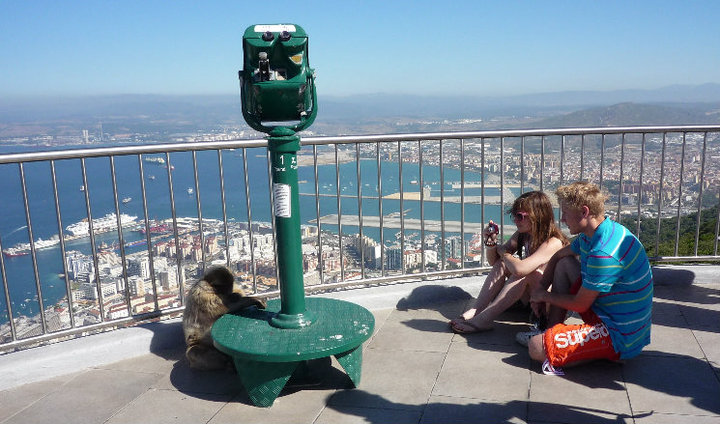
  • Climbing to the top of the Gibraltar Rock and seeing the monkeys in cool mountain air 
  • G&T from the fridge in my room
  • Large room with power shower and  balcony (but see below)
  • Our room maid was charming and she showed us a picture of the last cruise ship she was on which sank (really, I checked on Google when I got home, as I thought she was just after a large tip!). (I did tip generously due to her kindness, cheerfulness and one extra chocolate one night) 
  • Being able to read loads of legal thrillers (John Grisham)  on the balcony (fiction I think)
  • Experiencing 24 hours of pitch, roll and yaw (repeat 1000 times) while on my double bed for one in the Bay of Biscay  (not sure if this is good or bad)
  • Inspecting the Anchor Room  
  • Opportunity to take unusual photos, e.g. the Black Box Accident Recorder positioned at front of boat.
  • Quite a good library.... with printed books from the last century
  • Churches and Cathedrals in Florence, no tripod used 
  • Generally very good P and O staff (I must say this but true)
  • No BBC radio but had podcasts on my ipod
  • Watching a young man with no helmet, flying 200 feet in the air cleaning windows (but see below re *men* cleaning windows ) 
  • Ship refueling, very tidy engineering, please come and tidy the cables in my office  and work for me...
  • The French Doctor :-) (but check dead patients as below)  He had a wooden  bookshelf full of reference books. I had an ear infection and he advised me to have ear syringed back in Cambridge. I did, and it was the most delightful and rewarding  physical experience (apart from a back massage) I have ever had in the last two years. No ear problems since then!
  • Music synthesisers on the ship, very neat!  - see image 

  • Best bit - Getting home to my garden and watering it, drought in July 2011 in UK  and grey cat  Poppi asleep in the bird bath  (Poppi has since left home)


BUT ...


The Top 10 WORST  features - not in order


  • Getting dressed for dinner, looked like all ladies were dressed up in white  for a wedding and blinged out with jewels and wobbly shoes . Actually picture below was taken on the lifeboat.

  • No internet connection, apart from paying £12/hour  for 14.kBits/sec, I am NOT  desperate (but see below re Norway and Unbrellas  )
  • Getting a very high mobile  phone surcharge off the coast of Spain,  in the Mediterranean, via Norway. O2 lady asked if Norway was near to Spain? mobile phone signal only goes 10 miles (signal got *latched on* to a Norwegian ship 
  • Eating breakfast (soggy bacon...yes it is possible)  on my own in the restaurant  with a spare chair, but being asked by a handsome young gentleman  "is anyone sitting here?". I  said No... ;-) ... so he  nicked my chair.
  • TV in room was a 12" Cathode Ray Tube set to perma orange, could not mend TV
  • Rome, (again)  3 hour walk in intense heat in July, had to sit down on shop step as as dehydrated but was kicked off, as thought to  be a tramp , used an App on iPhone to capture my walk. The circularly track is where I got lost in the Colosseum. 
  • No live animals on a cruise, plenty of food however, but no decent coffee (have mentioned already?)
  • IMPORTANT: Having the urge to go over the railing of my balcony (this is not weird or  morbid, apparently many people (I did speak to some passengers) have this urge and so block the balcony door with a chair)  
  • Being told we were due for Force 6 Gale. As I had no internet, I texted Ex-hub, R,  to asked what this means. He kindly  replied "You need an Umbrella" . That is official on the Beaufort Scale, but not not useful on a cruise ship.(No Umbrellas) 
  • Money grabbing opportunities at every turn, perhaps jewelry?  (see The Cost of Oxygen)  No I do not want a fake Rolex, got a perfectly decent fake one in Hong Kong  circa 1990  
  • no proper milk or fresh food for 2 WEEKS! Just condensed milk, rubbish for coffee. Why no fresh prawns in the Med? All UK food!
  • Man who reserved his sun lounger for 90 mins!  while he ate lunch in the restaurant . We were short of seats at 13:00  and I needed to sit down. I mentioned that The Captain said we cannot reserve sun loungers, but he was rather rude about the captain. I took his picture and also of 5 rather startled senior ladies listening to  this exchange. (please ask for picture).
  • Seeing couples eating a meal for 45 mins with no conversation or eye contact  between them (not sure if good or bad). Not very romantic. 
  • 3 people died on our cruise. One paralysed as slipped down the banister.  One man at our table paid £400 to be resuscitated (survived) Re The Cost of Oxygen. 

  • 2 men appeared unexpectedly  in front of my cabin window on a rope  "cleaning windows" while I was un-attired,  with a glass of wine (me not them)
  • visited Leaning Tower of Pisa, we were not allowed to climb it! Horrible long walk, very hot and no toilets.(Nipped into a disabled loo in a pub) .  
  • Paid P and O   for an executive coach from Cambridge to Southampton with a toilet on board for the 4-5 hours, but they forgot to install the toilet. Luckily not a problem.
  • The internet link failed for 2 days, apparently due to a "faulty bit", but I was told to keep quiet about this in case the other  passengers were alarmed.
  • It was noticed that I was single, so I was put with a table of senior single ladies, some of who had severe  learning difficulties and hearing issues. I am sorry if this sounds unkind, (I am 20dB down in the left [ear]   but  conversation was a challenge. However, you can see me here chatting on iPhone 4 from my Cabin , could call my Mum :-). Fantastic!
  • I think I was the only single person, but a good opportunity for photography and my main pleasure was in daughter and her BF enjoying cruise. I was reprimanded for taking too many photographs of the antenna and the "flight recorder" 

Estimated spent 4 x 6 = 24 hours total in 10 days sat on a hot COACH! This is time that preferably should have been spent sitting on the boat, with a sea breeze, with a refreshing drink and reading or socialising. (Children under 18 need supervising so I could not/would not  send them to Rome on their own).


Please remind me of these notes in case I ever want to go on a cruise again. 
All the above is true.


Details:
P& O Oceana, Mediterranean July 2013


Winner - Techweek Europe Office Gadget June 2013


Talking Head Wins Our Office Gadget Challenge


This is a  winning design by Lyndsay Williams  for  a European design competition for an original  new office gadget. See here for details of competition from Techweek Europe.

The design is a  3D printed head  placed in an office kitchen and records samples of gossip and replays this at appropriate moments, but disguising the speaker. It is similar to a parrot but with animations for the face. See here for design details  Office Pet - Talking Head .


When judging the competition, we were asking ourselves one question – which of these wondrous devices would we want to see in our own office? And the answer was clear.
We sit in a world which has been silenced. Everyone spends most of their time interacting through Skype and Twitter, with only an occasional grunt or sigh. The truth is, tech has killed our office conversation, and we’d like to see tech bring it back to life.

The original design was based on a 3D head design and has now slimmed down to a  3D printed wall poster created in Bas relief as below.  The face can talk and the animated eyes can follow the staff around in the kitchen using  sensors that track the person. 


The plan is to have an  interactive  poster designed with an animated eyes like this Lord Kitchener poster:
Your face can be scanned with a 3D scanner and used for the poster.


The new design has sensors and microcontrollers embedded into the poster. The entire 3D poster should be less than 3mm thick inc lithium battery. The tactile face has touch sensors for further interaction. 

Girton Labs is looking for sponsors for this research/arts project so the first prototype can be built.
The hardware costs are covered by TechweekEurope  there is some software design required  based on Atmel or ARM processor.


Contact Lyndsay Williams sensecam@gmail.com or +44 (0) 7970 101578.
Cambridge UK.


Friday, 1 March 2013

Low cost electronic scents and smells

Lavender bulb electronic scent designed by L Williams, size approx 10mm x 10mm 

I have been working on scent generation since 2008, initially  financed by a research grant from the UK's East of England Development Agency, for  a cookery book with embedded electronic smells,   From 2009 -2011 I did some of the electronic design  for Dr Jenny Tillotson of the University of the Arts, London.
 Motion is detected by touch (e.g. accelerometers ) which triggers the smell.

The scent, for example synthetic chocolate, is added using a solid scent under microcontroller software. This  is released by embedding the liquid  scent oil  in solid silicone and using a 1- 5W heater to release smell.  There has always been a challenge with computer controlled liquid scent release in making it leakproof,  compact for mobile phones, low battery power and with no lingering smell. Some liquid oils are toxic and need a solid enclosure.   However solid materials can be used to embedded the scent, technology as here from 2008  in silicone scented bulbs which use low cost silicone bath sealant.  Another example are scented silicone wristbands, the body heat releases scent.
 In this example, a  heater (nichrome wire embedded  inside the silicone) is switched on to release fragrance and a non contact thermopile temperature sensor with just milliseconds response time allows just  the correct amount of heat to be added to enable long battery life from a mobile phone battery. Nichrome heaters  have been used to emit scent from materials such as oils  for animal attractant  hunting activities.
 The scent is embedded in  liquid silicone rubber, which cures to a solid over several hours,  so no leakage or lingering smells as with liquid scents. The silicone is inert, and can be mixed with scented oils.  Custom shapes of silicone rubber can be created in a mould. One example is of  heater  resistor dipped in silicone rubber. The scent can be quickly terminated by the closure of a lid, e.g. closing a page in a book. A Flexinol Hinge can be used.


 Multiple scents can be mixed and proportional control of individual  scents added using the heaters with pulse width modulation in an x/y matrix arrangement to reduce cost. Alternative heating can be used e.g. Peltier heaters which can be switched from heating to chilling under software control to stop the odour release. Ultrasonic vibration  may be able to be used to release fragrance so no heat required, instant on/off  and longer battery life.

Apple iPhone with scent cartridge illustration

Prototype chocolate  heater
Lavender bulb, a LED can also be embedded


There are many possibilities for adding miniature scent emitters, e.g. in mobile phones. This will allows no visual or audio alerts to be sent, e.g. roses to your Mother, chocolate from your daughter   or coffee smell from your office. When the scent has expired, a new cartridge can be plugged in as illustration above with iPhone.  Medical applications e.g. sports,  relaxation and sleep devices can be built.
It was  found that embedding colour using  Red Green Blue mixer LED into the silicone aided the aesthetics. Tests are ongoing re adding  invisible UV LEDs.

3 Watt LED heaters from Philips,  can add colour,  Red, Green Blue and all colours of the spectrum, size of a coin

The silicone can be made into an ink and can be printed onto paper using screen printing. 


References


Some of my 2008  work on sensor triggered cookery scented books  as  here.

I  have worked for  Sensory Design and Technology Ltd, The University of the Arts, Central Saint Martins,  London and Northumbria  University 2009-2012 on computer control for scent research with Dr Jenny Tillotson and Prof Raymond Oliver.
2010 report on University of the Arts London research on scent generation. 

Here is a January 2011 patent on scent release from the University of Cambridge.


Contact Lyndsay Williams if you are interested in assistance with computer controlled scent designs.  sensecam@gmail.com or +44 (0)  7970 101578.


Wednesday, 6 February 2013

Sentinel Sensing Computer for your kitchen

Design concept Feb 2013 


If you lived on your own and were ill or fell, how long would it take people to find out? Hours, days?
What if you can't reach your mobile phone? Also not everyone is on the internet e.g. the elderly. We don't all want to wear sensors 24/7.
29% of households in the UK have single occupancy in 2011 as here.
This Sentinel computer can care for you in your home, young and old.  This device is placed in a room you normally use frequently, e.g. the kitchen.  It is useful for those who live on their own, it watches for inactivity of person, e.g. in the kitchen, and sends an SMS  text message to a friend or carer if no activity for a pre set time period. It can be placed on the  window ledge, and so no interference from movement from cats and dogs. Sentinel is like a simplified mobile phone but just with sensors. There are multiple sensors including person detection, light, temperature, humidity,  etc  to provide accurate alerts.  The device is mains powered with a battery backup. A suitable place to put the Sentinel is a  kitchen window ledge so your activity can be monitored by sensing washing and cooking. There is no invasion of privacy as no cameras or microphones used,  alerts only sent by SMS Text message to  selected friends.  A PAYG Sim is used. The Sentinel also provides warm led lighting to indicate it is watching over you. Intelligent software learns normal usage of the room to avoid false alerts.
Sensors include infra red detections of person and also kitchen safety sensors for gas and humidity. Size approx 4 x 4".

There have been several  devices for caring for people who live on their own.=, but with possible disadvantages.  They can be dependant on the internet, installation or wearing of equipment, false signals from pets, invasion of privacy  or subscription services.  The Sentinel is much simpler to use and lower cost.

The Sentinel is an engineering prototype at the moment but the working components are based on Technology based on existing working components from Girton Labs, e.g. SenseBulb as shown on BBC news in 2009. Sentinel is based on this technology but lower cost and more accurate alerts.


The Weather in your Kitchen.

There is also another Sentinel  variant, lower cost, based on a wifi interface. This has applications for social networking and broadcasts via Twitter "The Weather in your Kitchen". (or office) It is a research project and based on multiple sensors, thermal, light, POR, humidity and can broadcast, Quiet Kitchen, Hot Kitchen, Stormy Kitchen,etc. It is a simple way of indicating your physical status at home or in the office in a playful but non intrusive way. People can be so busy nowadays but here is a measure of it....


More details, Lyndsay Williams, Girton Labs Ltd,  sensecam@gmail.com, 07970 101578